
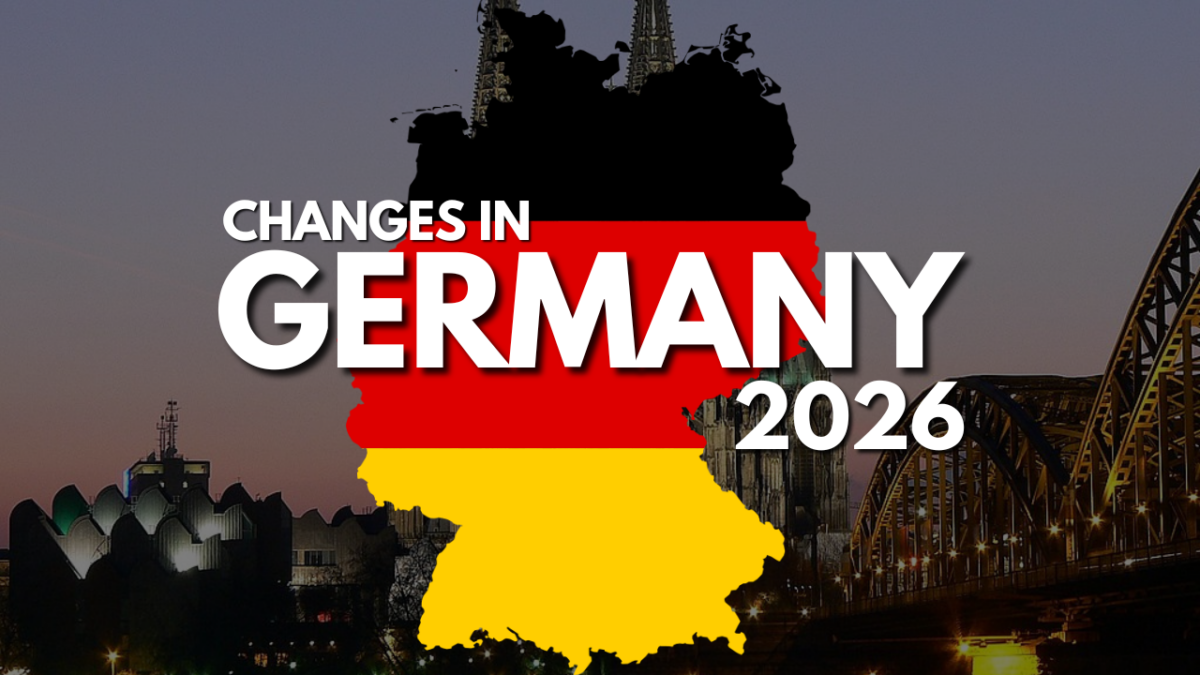
Nothing in Germany stays the same for long, especially when it comes to money, work, and social benefits.
Every year, the German government quietly adjusts wages, taxes, allowances, and social systems. If you blink, you miss it. And when you miss it, you feel it in your payslip, your transport costs, your benefits, and so on.
Currently, Germany is undergoing one of its biggest financial and social recalibrations in recent years. Inflation pressures, an aging population, energy costs, and shifting politics are forcing major changes.
Whether you are an international student, an expat, or a working professional, these updates directly affect your daily life.
Let me walk you through the most important changes happening in Germany and what they really mean for you.
Minimum Wage Increase and Higher Mini Job Limits
Let us start with what everyone cares about. Income.
Germany has increased its statutory minimum wage to €13.90 per hour. At the same time, the mini job income threshold has risen from €556 to €603 per month.
This means that millions of workers will now earn more per hour, and mini-job holders can earn more without crossing into higher tax or social contribution brackets.
For students, part-time workers, and people combining multiple income streams, this change matters more than it looks. Annually, even small hourly increases add up.
Tax Changes That Affect Your Take-Home Pay
If we are talking about Germany, we have to talk about taxes.
The basic tax-free allowance (Grundfreibetrag) has been increased from €12,096 to €12,348 per year. This means the first €12,348 of your annual income is not taxed.
Income tax brackets are also being adjusted to reflect inflation. In addition, the Kinderfreibetrag, known as the child-related tax allowance for parents, has been increased to €9,756.
Another important change affects commuters.
The commuter allowance you can claim in your tax declaration has increased to 38 cents per kilometer from the first kilometer. Previously, lower rates applied to the first part of the journey.
If you commute regularly, this alone can make a noticeable difference when you file your tax return.
The key takeaway here is simple.
Always check your Lohnabrechnung, your salary slip. Small tax changes may look insignificant monthly, but they matter a great deal over a year.
Kindergeld Increase
Families are also seeing some relief.
Kindergeld has increased to €259 per child per month. For households with multiple children, this adjustment provides meaningful additional support, especially with rising food, housing, and energy costs.
Bürgergeld Is Changing
Germany is also restructuring its social welfare system.
Bürgergeld is being renamed to Grundsicherung, signaling a change in how social support is positioned and administered. This change of name reflects broader reforms aimed at efficiency, work integration, and long-term sustainability.
If you rely on social benefits or may need them in the future, this is an area to watch closely.
Deutschland Ticket Is Now More Expensive
Remember the famous €49 Deutschland Ticket that later became €58?
It has changed again. The ticket now costs €63 per month.
Yes, public transport is more expensive. But despite the increase, the Deutschland Ticket remains one of the best mobility deals in Europe.
With one ticket, you can travel across Germany and use buses, trams, and regional trains nationwide. When you compare it to the cost of owning a car, fuel, insurance, maintenance, and parking, public transport still wins for many people.
Insurance Contributions Are Increasing
Germany runs on insurance. Health insurance and pension insurance contribution limits have increased.
These adjustments are designed to support Germany’s aging population and maintain the stability of the social system. However, they also mean higher deductions for some workers.
Again, this is why understanding your payslip matters. Do not ignore the details.
EU Pay Transparency Directive Is Coming
One of the most significant changes is still ahead.
By June 2026, Germany will implement the EU Pay Transparency Directive. This directive aims to reduce pay gaps and improve fairness at work.
This means that Job ads are expected to include salary ranges. Employers will need clearer frameworks for how pay is determined. Employees will have more rights to information about compensation structures.
If implemented properly, this could change how people negotiate salaries in Germany and reduce the culture of guessing what a role actually pays.
Many professionals are cautiously optimistic, and honestly, so am I.
So What Does All This Mean for You
Taken together, these changes tell a clear story.
The German government is trying to protect workers, support families, manage inflation, and stabilize the social system. But stability comes at a cost.
Yes, there are more benefits and more support.
But there are also higher expenses.
Factories are slowing down.
Energy prices remain high.
People are worried.
And politics is shifting.
Let’s keep the conversation going in the comments. Let’s learn from each other.
Until next time, have a fantastic day.
Want More Real Talk About Life in Germany?
👉 Follow my unfiltered adventures on Instagram
👉 Follow me on TikTok
👉 Subscribe to my YouTube channel for new videos every week
Download Your Free Checklist
With everything you need to know before moving to Germany, and to help you start to settle quickly as soon as you arrive in Germany
RECENT POSTS
-

6 German Habits That stole My Nigerian Soul (And I’m Not Even Mad)
Let’s be real, when I first landed in Germany, I thought my Nigerian ways were solid. Why fix what isn’t broken, right? Spoiler alert: Germany broke me. And…
4 min read
-

7 Mistakes I Made as an International Student in Germany (Don’t Be Like Me!)
In my opinion as a part time recluse, I enjoyed my time as a student here in Germany. But, looking back, there are a few things I definitely…
4 min read
-

How to Deal with Loneliness Abroad (And Actually Enjoy Your Company)
“I’m friendly! People like me! How hard could making friends in Germany really be?” That’s what I kept telling myself when I first moved Abroad. Let me tell…
4 min read
-
Living in Germany: What You Really Need to Know About German Homes, Rent & Everything in Between
So you’re thinking of moving to Germany, or maybe you’re already here, trying to figure out why your apartment doesn’t have a kitchen. Either way, welcome! In the…
4 min read
-

How To Apply To German Universities – A Step-By-Step Guide
Applying to universities in Germany can feel a bit overwhelming, especially when you don’t have the right information or you are trying to figure out everything on your…
4 min read
-

Your Simple Guide to Germany’s Insurance System
Germany is a country that takes its insurance system seriously. With one of the most organized frameworks in the world, having the right coverage isn’t just a smart…
4 min read